
Pedagogical actions that promote critical thinking in future science teachers
Downloads
- PDF (Español (España)) 384
- EPUB (Español (España)) 38
- VISOR (Español (España))
- MÓVIL (Español (España))
- XML (Español (España)) 46
DOI
https://doi.org/10.25267/Rev_Eureka_ensen_divulg_cienc.2025.v22.i3.3604Info




Authors
- Liliana Pedraja Rejas (CL) Departamento de Ingeniería Industrial y Sistemas, Universidad de Tarapacá https://orcid.org/0000-0001-7732-4183
- Katherine Acosta García (CL) Departamento de Educación, Universidad de Tarapacá https://orcid.org/0000-0001-5744-6618
- Carlos Rodríguez Cisterna (CL) Departamento de Educación, Universidad de Tarapacá https://orcid.org/0000-0002-1962-7335

Abstract
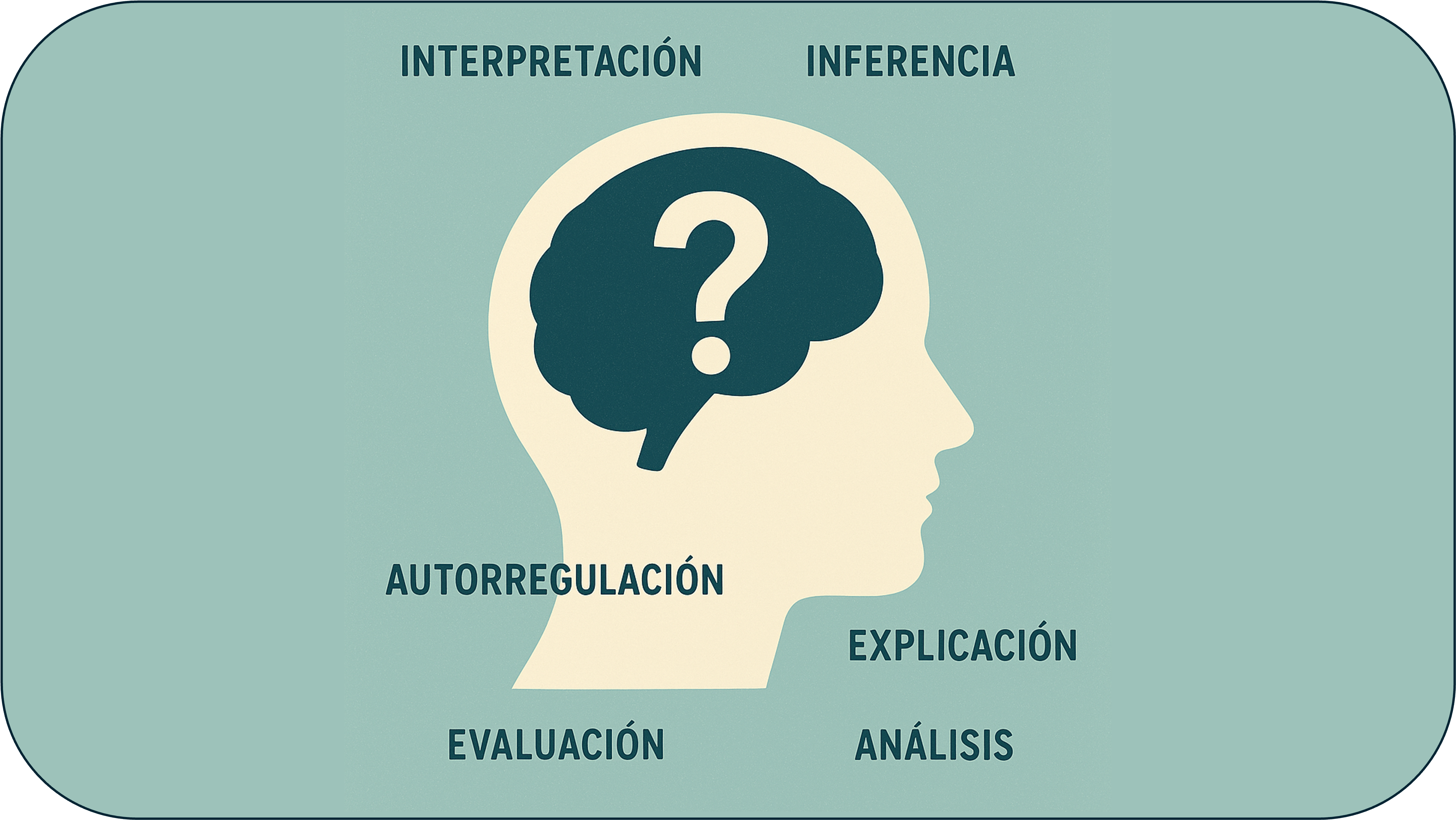
This study aims to identify and characterize the critical thinking skills activated in the discourse of preservice teachers, based on the pedagogical actions implemented by a teacher educator during science lessons. The research is framed within the interpretive paradigm, using a qualitative approach and a single case study design, complemented by discourse analysis. The results show that certain pedagogical actions (such as the formulation of open-ended questions, the use of Socratic dialogue, the modeling of a skeptical attitude, and the implementation of inquiry-based methodologies) promote the activation of skills such as inference, analysis, explanation, and, to a lesser extent, self-regulation. It is concluded that these pedagogical practices help create favorable conditions for the development of critical thinking in teacher education. This study offers a situated contribution that invites further exploration of effective strategies to strengthen this competence in future teachers.
Keywords

Downloads
Supporting Agencies
How to Cite
License
Copyright (c) 2025 Liliana Pedraja Rejas, Katherine Acosta García, Carlos Rodríguez Cisterna

This work is licensed under a Creative Commons Attribution-NonCommercial 4.0 International License.
Require authors to agree to Copyright Notice as part of the submission process. This allow the / o authors / is non-commercial use of the work, including the right to place it in an open access archive. In addition, Creative Commons is available on flexible copyright licenses (Creative Commons).

Reconocimiento-NoComercial
CC BY-NC
References
Adúriz-Bravo, A. (2023). Concepciones de enseñanza sobre la naturaleza de la ciencia: obstáculos epistemológicos que aparecen en el profesorado de ciencias. Revista Internacional de Pesquisa em Didática das Ciencias e Matemática, 4. https://periodicoscientificos.itp.ifsp.edu.br/index.php/revin/article/view/872
Agustinasari, A., Susilawati, E., Yulianci, S., Fiqry, R. y Gunawan, G. (2021). The implementation of inquiry by using local potential to improve critical thinking skills in BIMA. Journal of Physics Conference Series, 1933(1), 012078 . https://doi.org/10.1088/1742-6596/1933/1/012078
Bailin, S. (2002). Critical thinking and science education. Science & Education, 11(4), 361–375. https://doi.org/10.1023/a:1016042608621
Bargiela, I. M., Anaya, P. B. y Puig, B. (2022). Las preguntas para la indagación y activación de pensamiento crítico en educación infantil. Enseñanza de las Ciencias, 40(3), 11–28. https://doi.org/10.5565/rev/ensciencias.5470
Bellaera, L., Weinstein-Jones, Y., Ilie, S. y Baker, S. T. (2021). Critical thinking in practice: The priorities and practices of instructors teaching in higher education. Thinking Skills and Creativity, 41, 100856. https://doi.org/10.1016/j.tsc.2021.100856
Bernal-Herrera, P., Cano-Iglesias, M. J., Franco-Mariscal, A. J. y Blanco-López, Á. (2023). Impacto de un debate sociocientífico en las habilidades argumentativas y en la toma de decisiones del profesorado de secundaria en formación inicial. Enseñanza de las Ciencias, 41(3), 113–132. https://doi.org/10.5565/rev/ensciencias.5861
Bezanilla, M. J., Galindo-Domínguez, H. y Poblete, M. (2021). Importance of teaching critical thinking in higher education and existing difficulties according to teacher´s views. Multidisciplinary Journal of Educational Research, 11(1), 20–48. https://doi.org/10.447/remie.2021.6159
Blanco-López, A., España-Ramos, E. y Franco-Mariscal, A. J. (2017). Estrategias didácticas para el desarrollo del pensamiento crítico en el aula de ciencias [Teaching strategies for the development of critical thinking in the teaching of science]. Ápice, Revista de Educación Científica, 1(1), 107–115. https://doi.org/10.17979/arec.2017.1.1.2004
Caño, L., Sanz, J. y Gómez, M. (2024). Las preguntas y estrategias dialógicas de la docente para guiar la indagación en primaria. Enseñanza de las Ciencias, 42(2), 67–86. https://doi.org/10.5565/rev/ensciencias.6017
Çavuş, E., İdil, Ş. y Dönmez, İ. (2025). Effects of a design-based research approach on fourth-grade students’ critical thinking, problem-solving skills, computational thinking, and creativity self-efficacy. International Journal of Technology and Design Education, 1–21. https://doi.org/10.1007/s10798-025-09989-8
Celik, S. (2021). Teacher education program supporting critical thinking skills: A case of primary school teachers. Revista Amazonia Investiga, 10(41), 188–198. https://doi.org/10.34069/AI/2021.41.05.19
Cobo-Huesa, C., Abril, A. M. y Ariza, M. R. (2021). Investigación basada en el diseño en la formación inicial de docentes para una enseñanza integrada de la naturaleza de la ciencia y el pensamiento crítico. Revista Eureka sobre Enseñanza y Divulgación de las Ciencias, 18(3), 3801. https://doi.org/10.25267/Rev_Eureka_ensen_divulg_cienc.2021.v18.i3.3801
Creswell, J. W. y Creswell, J. D. (2018). Research design: Qualitative, quantitative, and mixed methods approaches. Sage.
Facione, P. A. (1990). Executive summary of critical thinking: A statement of expert consensus for purposes of educational assessment and instruction. California Academic Press.
Facione, P. (2023). Critical thinking: What it is and why it counts. Insight Assessment. https://insightassessment.com/iaresource/critical-thinking-what-it-is-and-why-it-counts/
Franco-Mariscal, A. J., Cano-Iglesias, M. J., España-Ramos, E. y Blanco-López, A. (2024). Theoretical perspectives and approaches for the development of critical thinking. En A. J. Franco-Mariscal (Ed.), Critical thinking in science education and teacher training (pp. 3–42). Springer. https://link.springer.com/book/10.1007/978-3-031-78578-8
García-Carmona, A. (2023). Scientific thinking and critical thinking in science education. Science & Education. https://doi.org/10.1007/s11191-023-00460-5
Giri, V. y Paily, M. U. (2020). Effect of scientific argumentation on the development of critical thinking. Science & Education, 29(3), 673–690. https://doi.org/10.1007/s11191-020-00120-y
Herrera, E. (2024). Reflexión crítica en formación inicial: caracterización de trayectorias al diseñar secuencias. Enseñanza de las Ciencias, 42(2), 87–107. https://doi.org/10.5565/rev/ensciencias.6023
Horálek, V. y Distler, P. (2024). Development of critical thinking in chemistry teaching. Chemické Listy, 118(9), 478–483. https://doi.org/10.54779/chl20240478
Jiménez-Aleixandre, M. P. y Puig, B. (2022). Educating critical citizens to face post-truth: The time is now. En B. Puig y M. P. Jiménez-Aleixandre (Eds.), Critical thinking in biology and environmental education. Facing challenges in a post-truth world (pp. 3–19). Springer. https://doi.org/10.1007/978-3-030-92006-7
Kirk, M., Tytler, R. y White, P. (2023). Critical thinking in primary science through a guided inquiry pedagogy: A semiotic perspective. Teachers and Teaching, 29(6), 615–637. https://doi.org/10.1080/13540602.2023.2191181
Lederman, J. S. (2009). Teaching scientific inquiry. National Geographic Society.
Lederman, N. y Abd-El-Khalick, F. (1998). Avoiding de-natured science: Activities that promote understandings of the nature of science. En The nature of science in science education: Rationales and strategies (pp. 83–126). Springer Netherlands.
Lederman, N. G. y Lederman, J. S. (2004). Project ICAN: A professional development project to promote teachers' and students' knowledge of nature of science and scientific enquiry. 11° Conferencia Annual de SAARMSTE, Cape Town, South Africa.
Lu, Y., Lin, H., Smith, T. J., Hong, Z. y Hsu, W. (2020). The effects of critique-driven inquiry intervention on students’ critical thinking and scientific inquiry competency. Journal of Baltic Science Education, 19(6), 954–971. https://doi.org/10.33225/jbse/20.19.954
Lun, V. M. C., Yeung, J. C. y Ku, K. Y. L. (2023). Effects of mood on critical thinking. Thinking Skills and Creativity, 47, 101247. https://doi.org/10.1016/j.tsc.2023.101247
Mahdi, O. R., Nassar, I. A. y Al Musalmani, H. A. I. (2020). The role of using case studies method in improving students' critical thinking skills in higher education. International Journal of Higher Education, 9(2), 297–308. https://doi.org/10.5430/ijhe.v9n2p297
Marangio, K., Carpendale, J., Cooper, R. y Mansfield, J. (2024). Supporting the development of science pre-service teachers’ creativity and critical thinking in secondary science initial teacher education. Research in Science Education, 54, 65–81. https://doi.org/10.1007/s11165-023-10104-x
Miles, M. B., Huberman, A. M. y Saldaña, J. (2018). Qualitative data analysis: A methods sourcebook. Sage Publications. https://us.sagepub.com/en-us/nam/qualitative-data-analysis/book246128
Morales, M., Acosta, K. y Rodríguez, C. (2022). El rol docente y la indagación científica: análisis de una experiencia sobre plagas en una escuela vulnerable de Chile. Revista Eureka sobre Enseñanza y Divulgación de las Ciencias, 19(2), 1–20. https://doi.org/10.25267/Rev_Eureka_ensen_divulg_cienc.2022.v19.i2.2201
Mueller, J. F., Taylor, H. K., Brakke, K., Drysdale, M., Kelly, K., Levine, G. M. y Ronquillo-Adachi, J. (2020). Assessment of scientific inquiry and critical thinking: Measuring APA Goal 2 student learning outcomes. Teaching of Psychology, 47(4), 274–284. https://doi.org/10.1177/0098628320945114
Núñez, L., Gallardo, D., Aliaga, A. y Díaz, J. (2020). Estrategias didácticas en el desarrollo del pensamiento crítico en estudiantes de educación básica. Revista Eleuthera, 22(2), 31–50. https://doi.org/10.17151/eleu.2020.22.2.3
Nussbaum, E. M., Van Winkle, M. S., Tian, L., Putney, L. G., Huerta, M., Perera, H. N., Dove, I. J., Herrera, A. N. y Carroll, K. R. (2024). Extending science instruction beyond the CER: Use of critical questions in the argumentation of middle school science students. Science Education, 108(5), 1420–1447. https://doi.org/10.1002/sce.21877
Pedraja-Rejas, L. M., Acosta García, K., Pavez, J. P. J. y Chacón, Á. E. R. (2024). Abordaje de controversias sociocientíficas y científicas históricas para promover el pensamiento crítico en la formación docente en ciencias. Sisyphus: Journal of Education, 12(3), 29–51. https://doi.org/10.25749/sis.36566
Pedraja-Rejas, L. y Rodríguez-Cisterna, C. (2023a). Habilidades del pensamiento crítico y liderazgo docente: Propuesta con perspectiva de género para la formación inicial. Revista Venezolana de Gerencia, 28(104), 1667–1684. https://doi.org/10.52080/rvgluz.28.104.17
Pedraja-Rejas, L. y Rodríguez, C. (2023b). Desarrollo de habilidades del pensamiento crítico en educación universitaria: Una revisión sistemática. Revista de Ciencias Sociales, XXIX(3), 494–516.
Pedraja-Rejas, L., Maulen-Berrios, C. y Rivas-Cauna, C. (2024). Cuerpo académico y pensamiento crítico en las universidades. Ingeniare. Revista chilena de ingeniería, 32, 17. https://doi.org/10.4067/s0718-33052024000100217
Plummer, K. J., Kebritchi, M., Leary, H. M. y Halverson, D. M. (2022). Enhancing critical thinking skills through decision-based learning. Innovative Higher Education, 47, 711–734. https://doi.org/10.1007/s10755-022-09595-9
Porlán, R., Pérez-Robles, A. y Delord, G. (2024). La didáctica de las ciencias y la formación docente del profesorado universitario. Enseñanza de las Ciencias, 42(1), 5–22. https://doi.org/10.5565/rev/ensciencias.5998
Puig, B. y Jiménez-Aleixandre, M. P. (2022). The integration of critical thinking in biology and environmental education: Contributions and further directions. En B. Puig y M. P. Jiménez-Aleixandre (Eds.), Critical thinking in biology and environmental education. Facing challenges in a post-truth world (pp. 1–26). Springer. https://doi.org/10.1007/978-3-030-92006-7
Pursitasari, I. D., Suhardi, E., Putra, A. P. y Rachman, I. (2020). Enhancement of student’s critical thinking skill through science context-based inquiry learning. Jurnal Pendidikan IPA Indonesia, 9(1), 97–105. https://doi.org/10.15294/jpii.v9i1.21884
Quintanilla, M. y Adúriz-Bravo, A. (2022). Enseñanza de las ciencias para una nueva cultura docente: Desafíos y oportunidades. Ediciones UC.
Ramsay, K., Gill, H. K. y Elvira, K. S. (2025). “The chocolate conundrum” and other easy active learning additions to traditional undergraduate science courses designed to teach for critical thinking. Journal of Chemical Education. https://doi.org/10.1021/acs.jchemed.4c00947
Reffhaug, M. B. A., Andersson-Bakken, E. y Jegstad, K. M. (2024). Supporting primary students’ critical thinking in whole-class conversations about sustainability issues. Environmental Education Research, 30(10), 1840–1855. https://doi.org/10.1080/13504622.2024.2309584
Rizki, I. A. y Suprapto, N. (2024). Project-oriented problem-based learning through SR-STEM to foster students’ critical thinking skills in renewable energy material. Journal of Science Education and Technology, 33(4), 526–541. https://doi.org/10.1007/s10956-024-10102-2
Rodríguez-Ponce, E., Pedraja-Rejas, L., Araneda-Guirriman, C. y Rodríguez, J. (2021). Importancia y desafíos de la educación inicial docente: El rol de las universidades regionales. Revista de Ciencias Sociales (Ve), 27(4), 465–473.
Romero-Ariza, M., Quesada Armenteros, A. y Estepa Castro, A. (2024). Promoting critical thinking through mathematics and science teacher education: The case of argumentation and graphs interpretation about climate change. European Journal of Teacher Education, 47(1), 41–59. https://doi.org/10.1080/02619768.2021.1961736
Santos, L. F. (2017). The role of critical thinking in science education. Journal of Education and Practice, 8(20), 160–173. https://eric.ed.gov/?id=ED575667
Shulman, L. S. (1987). Knowledge and teaching: Foundations of the new reform. Harvard Educational Review, 57(1), 1–22.
Stake, R. (2020). Investigación con estudio de casos (6th ed.). Morata.
Sutiani, A., Situmorang, M. y Silalahi, A. (2021). Implementation of an inquiry learning model with science literacy to improve student critical thinking skills. International Journal of Instruction, 14(2), 117–138. https://doi.org/10.29333/iji.2021.1428a
Urdanivia-Alarcón, D. A., Talavera-Mendoza, F., Rucano Paucar, F. H., Cayani Caceres, K. S. y Machaca Viza, R. (2023). Science and inquiry-based teaching and learning: A systematic review. Frontiers in Education, 8. https://doi.org/10.3389/feduc.2023.1170487
Varlık, S. (2024). Critical and creative thinking in science teachers: The moderating role of epistemology. Journal of Baltic Science Education, 23(5), 964–978. https://doi.org/10.33225/jbse/24.23.964
Vázquez, A. y Manassero, M. A. (2020). Pensamiento científico y pensamiento crítico: competencias transversales para aprender [Scientific thinking and critical thinking: Cross-cutting competencies for learning]. En A. Vilches (Coord.), Veinte años de avances y nuevos desafíos en la educación CTS para el logro de objetivos de desarrollo sostenible. VII Seminario Iberoamericano CTS (pp. 519–522). CTS.
Vila, L., Márquez, C. y Oliveras, B. (2023). Una propuesta para el diseño de actividades que desarrollen el pensamiento crítico en el aula de ciencias [A didactic proposal for the development of critical thinking in the high school science classroom]. Revista Eureka sobre Enseñanza y Divulgación de las Ciencias, 20(1), 130201. https://doi.org/10.25267/Rev_Eureka_ensen_divulg_cienc.2023.v20.i1.1302
Wale, B. D. y Bishaw, K. S. (2020). Effects of using inquiry-based learning on EFL students’ critical thinking skills. Asian-Pacific Journal of Second and Foreign Language Education, 5, 1–14. http://digilib.unimed.ac.id/42164/
Yin, R. K. (2017). Case study research and applications: Design and methods. Sage Publications.
Zabalza, M. A. (2007). Competencias docentes del profesorado universitario: Calidad y desarrollo profesional. Narcea.